Carl Jung on the Ego, Shadow and Self: The Path to Psychological Wholeness

The I is only the subject of my consciousness, while the self is the subject of my total psyche.
To understand Carl Jung's psychology, we must first distinguish between the ego and the Self.
These terms are often used interchangeably in everyday language, but for Jung they describe very different aspects of the psyche.
The ego is the centre of conscious identity. It is the part of us that says, "I am this kind of person." It contains the history we remember, the beliefs we consciously affirm, the roles we occupy and the image we present to the world.
The Self, by contrast, represents the totality of the personality. It includes the ego, but also everything that lies beyond conscious awareness.
The ego is who we think we are.
The Self includes who we are, who we have denied, and who we may still become.
The Ego and the Story We Tell About Ourselves
Every person develops a conscious account of who they are.
We may describe ourselves as kind, disciplined, intelligent, strong, generous, independent or successful. These descriptions help us maintain continuity. They allow us to move through the world with a relatively stable sense of identity.
Without the ego, ordinary conscious life would be impossible.
The ego allows us to make decisions, remember our experiences, form intentions and distinguish ourselves from other people. It is not an enemy to be destroyed. It is a necessary psychological structure.
The problem begins when the ego mistakes itself for the whole personality.
The conscious identity we construct is always selective. It includes certain qualities while excluding others. We remember some experiences and forget others. We accept the parts of ourselves that fit our preferred identity and distance ourselves from those that contradict it.
A person who believes they are always generous may remain unaware of the resentment beneath their generosity.
Someone who builds an identity around strength may be unable to admit fear, dependence or vulnerability.
A person may appear confident and successful while possessing no stable sense of identity beyond the recognition they receive from others.
The ego creates a coherent story, but coherence is not the same as completeness.
What Lies Beyond the Ego
Beyond conscious identity lies the unconscious.
The unconscious contains forgotten memories, repressed emotions, inherited patterns, instinctive drives and undeveloped possibilities. Some of these elements were excluded because they conflicted with the personality we wanted to maintain. Others were suppressed because they were unacceptable to family, culture or society.
Still others remain unconscious simply because life has never forced us to encounter them.
A person may possess courage they have never needed to express.
They may carry anger they have never allowed themselves to feel.
They may contain creativity, ambition, tenderness or assertiveness that has never found a place within their conscious identity.
This means the person we believe ourselves to be is always incomplete.
The ego sees only the portion of the personality that has entered conscious awareness. It does not automatically recognise the deeper forces influencing perception, emotion and behaviour.
This is why people are often surprised by their own reactions.
They may become intensely jealous, defensive or angry without understanding why. They may repeatedly sabotage relationships, pursue approval or fall into compulsive behaviour while insisting that these patterns do not reflect who they are.
Yet unconscious material does not disappear simply because the ego refuses to recognise it.
What is denied often returns through projection, emotional reactions, dreams, symptoms and repeated patterns of behaviour.
The Persona: The Identity We Present to the World
Jung used the term persona to describe the social mask we develop in response to the expectations of the world.
The persona is the version of ourselves that allows us to function within society. We behave differently as employees, parents, friends, partners or leaders. Each role requires a particular presentation.
Like the ego, the persona is not inherently false or harmful. Social life requires adaptation.
The danger arises when a person identifies completely with the role they perform.
Someone may become so attached to being admired, successful, intelligent or morally upright that they can no longer tolerate any experience that contradicts that identity.
The public image gradually replaces the deeper personality.
This can create a fragile form of identity.
If a person believes they are their career, then losing a job becomes more than a practical setback. It becomes a crisis of being.
If someone identifies entirely with their reputation, criticism feels like psychological annihilation.
If identity depends on being needed, admired or respected, then rejection may threaten the entire structure through which the person understands themselves.
What collapses in these moments is not merely a role.
It is an identity that had mistaken the role for the whole person.
The Shadow and the Rejected Personality
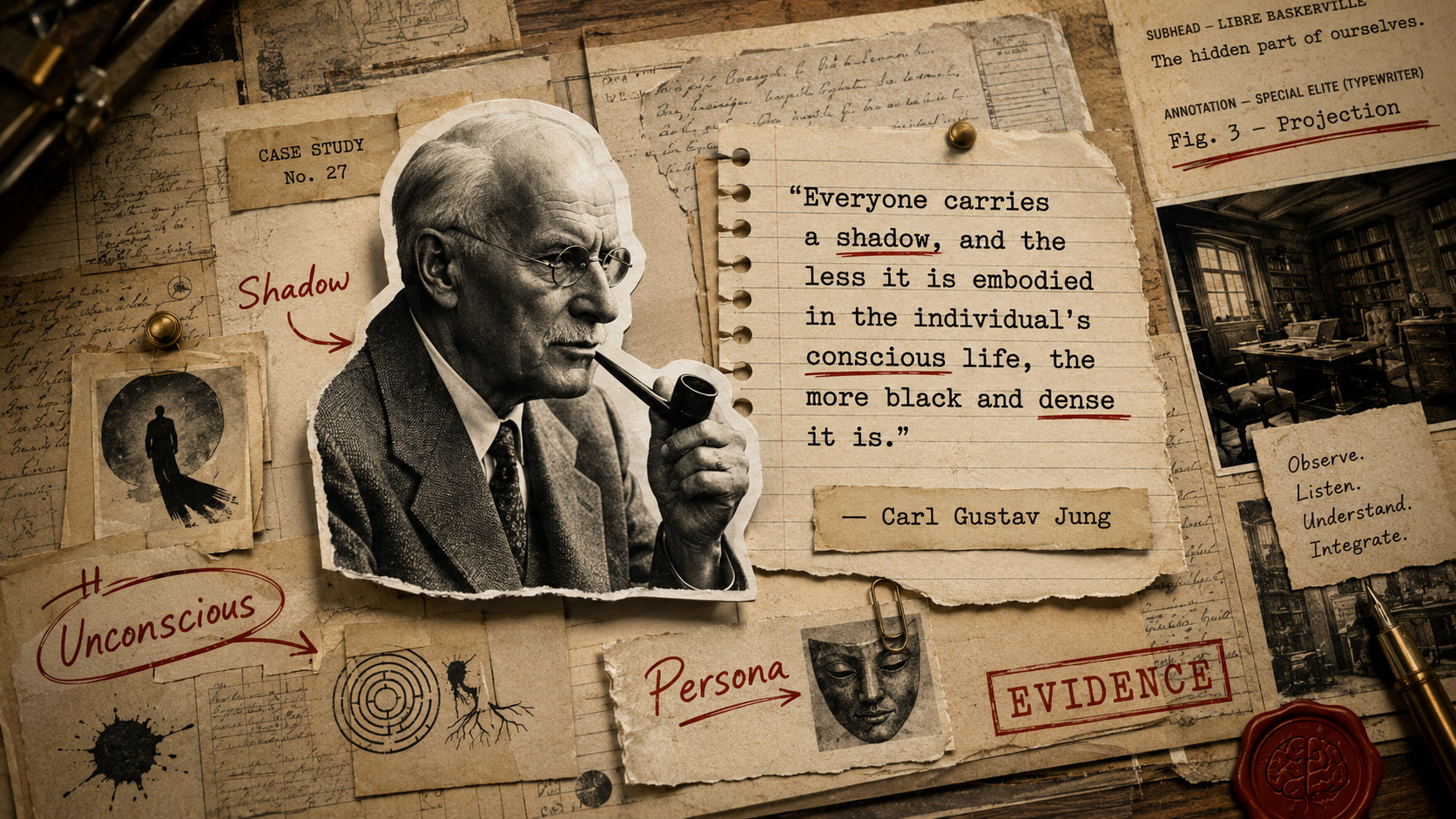
The aspects of the personality that conflict with the ego's preferred identity often form what Jung called the shadow.
The shadow may contain aggression, envy, selfishness, pride, fear, sexuality and resentment. But it does not contain only qualities we consider negative.
It may also contain confidence, ambition, spontaneity, creativity and strength.
A person taught that anger is unacceptable may lose access to healthy assertiveness.
Someone raised to value humility may suppress ambition.
A person who learned to survive through toughness may reject tenderness and emotional dependence.
The shadow therefore contains whatever the conscious personality has refused to include.
When these qualities remain unconscious, they are often projected onto others.
We condemn in another person what we cannot acknowledge in ourselves. We become fascinated by qualities we have abandoned. We react disproportionately because another person has activated something our conscious identity cannot tolerate.
The ego insists, "That has nothing to do with me."
The shadow reveals that it does.
Individuation: Moving Beyond a Narrow Identity
Jung called the movement toward greater psychological wholeness individuation.
Individuation is not the process of becoming more individualistic, self-centred or socially isolated. It is the lifelong process through which a person becomes more conscious of the total personality.
This requires a gradual loosening of exclusive identification with the ego.
The persona must be recognised as a social role rather than mistaken for the whole person.
The shadow must be confronted rather than projected onto others.
Instinct, emotion, conscience, dreams and unconscious imagery must be brought into a meaningful relationship with conscious life.
Individuation does not destroy the ego. It places the ego within a larger psychological reality.
The ego remains necessary, but it is no longer treated as the absolute ruler of the personality.
Instead, it becomes a participant in an inner dialogue.
The conscious mind begins to recognise that it does not fully understand the forces shaping its life.
This recognition requires humility.
Psychological Maturity Is Not Perfection
A psychologically mature person is not someone who has eliminated weakness, conflict or suffering.
It is someone whose identity no longer depends upon denying them.
Vulnerability can be admitted without destroying dignity.
Failure can be faced without complete collapse.
Anger can be acknowledged without automatically being acted upon.
Suffering can be integrated into the personality rather than treated only as evidence that life has gone wrong.
The mature personality is capable of holding contradiction.
A person can be strong and vulnerable.
Generous and resentful.
Confident and afraid.
Loving and capable of aggression.
Wholeness does not mean that these tensions disappear. It means they are brought into consciousness and held responsibly.
The goal of Jungian psychology is not moral perfection.
It is greater awareness, responsibility and integration.
What Jung Meant by the Self
For Jung, the movement toward wholeness is directed by what he called the Self.
The Self is not simply a perfected version of the ego.
It does not mean becoming more confident, productive or successful. It is not the ideal image the ego creates of who it wants to become.
The Self represents the total personality, conscious and unconscious together.
Jung described it as both the centre and the circumference of the psyche. It is the deeper organising principle that contains the ego while also extending beyond it.
The ego is the centre of conscious awareness.
The Self is the centre of the whole personality.
This distinction is essential.
The ego experiences itself as the centre of life. It interprets events according to its own desires, fears and ambitions. It assumes that psychological development should serve its existing plans.
The Self confronts the ego with the fact that it is not the whole.
Dreams, crises, relationships and periods of suffering may disrupt the ego's preferred direction. They may force the person to confront qualities, needs or truths that conscious identity had attempted to avoid.
From the ego's perspective, these experiences may feel like failure.
From the perspective of the Self, they may represent a necessary reorganisation of the personality.
Why Encounters With the Self Can Feel Religious
Jung believed that encounters with the Self could carry a religious or numinous quality.
The individual experiences something within the psyche that appears greater than conscious intention.
It may emerge through dreams, symbols, visions, powerful emotional experiences or moments of profound insight. It often challenges the ego rather than flattering it.
The Self does not simply confirm the person's preferred identity.
It confronts, judges and reorganises it.
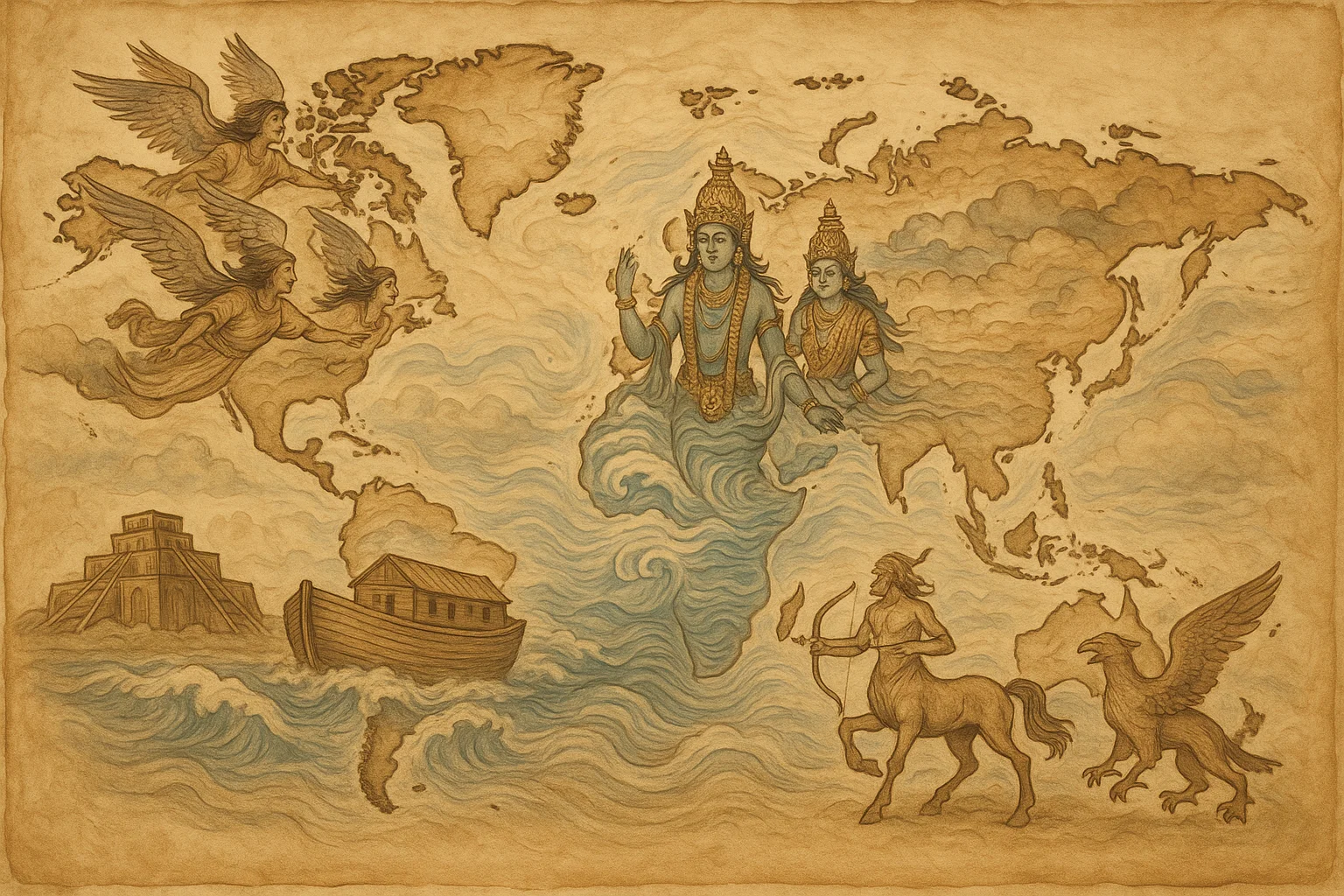
This is one reason symbols of wholeness appear repeatedly across religious traditions, mythology and dreams. Circles, mandalas, divine children, kings, sacred marriages and central figures may represent the psyche's movement toward order and integration.
Jung did not reduce religion to psychology. But he believed that religious images often correspond to deep psychological realities.
The experience of the Self may therefore feel like an encounter with an inner authority that transcends the limited perspective of consciousness.
It is within the person, yet it does not feel as though it belongs to the ego.
The Ego Must Relate to the Self
The goal is not for the ego to disappear.
Without a stable ego, there can be no conscious reflection, responsibility or integration. The ego is the structure through which unconscious material becomes known.
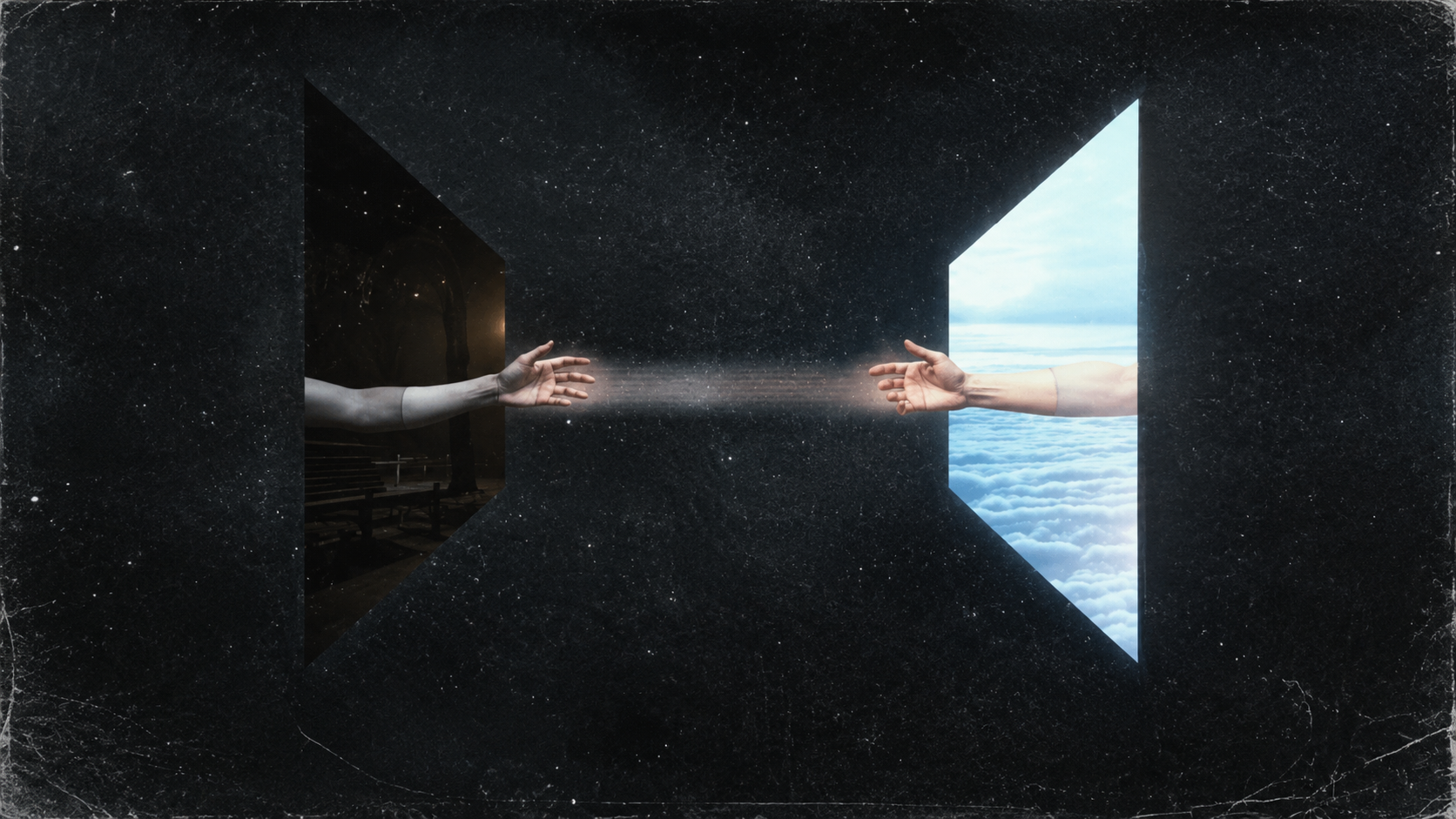
The task is therefore to establish a relationship between the ego and the Self.
A healthy ego is strong enough to face what it does not know about itself.
It can recognise its limitations without collapsing into worthlessness.
It can listen to unconscious material without being overwhelmed by it.
It can change without experiencing every challenge as a threat to identity.
The ego no longer asks only, "How can I preserve the person I believe myself to be?"
It begins to ask, "What is my life asking me to become conscious of?"
This shift lies at the centre of individuation.
From Identity to Wholeness
Most people begin life by building an identity.
We learn how to gain approval, avoid rejection and occupy a place within society. We develop abilities, values and roles that allow us to function.
But eventually, the identity that once protected us may begin to limit us.
The person who survived through control may need to encounter uncertainty.
The person who built their life around independence may need to acknowledge dependence.
The person who lived through achievement may need to discover value beyond success.
The person who always appeared strong may need to admit grief.
These encounters can feel like the loss of identity, but they may also mark the beginning of a deeper one.
Jung's distinction between ego and Self reminds us that we are always more than the conscious story we tell about ourselves.
The ego gives us identity.
The Self calls us toward wholeness.
The ego asks us to preserve the familiar.
The Self asks us to become what the familiar identity has excluded.
Psychological development begins when the ego is no longer destroyed by this discovery, but humbled by it.