1899
The Interpretation of Dreams
Freud's landmark work on dreams as expressions of unconscious wish and conflict.
 Undiscovered Self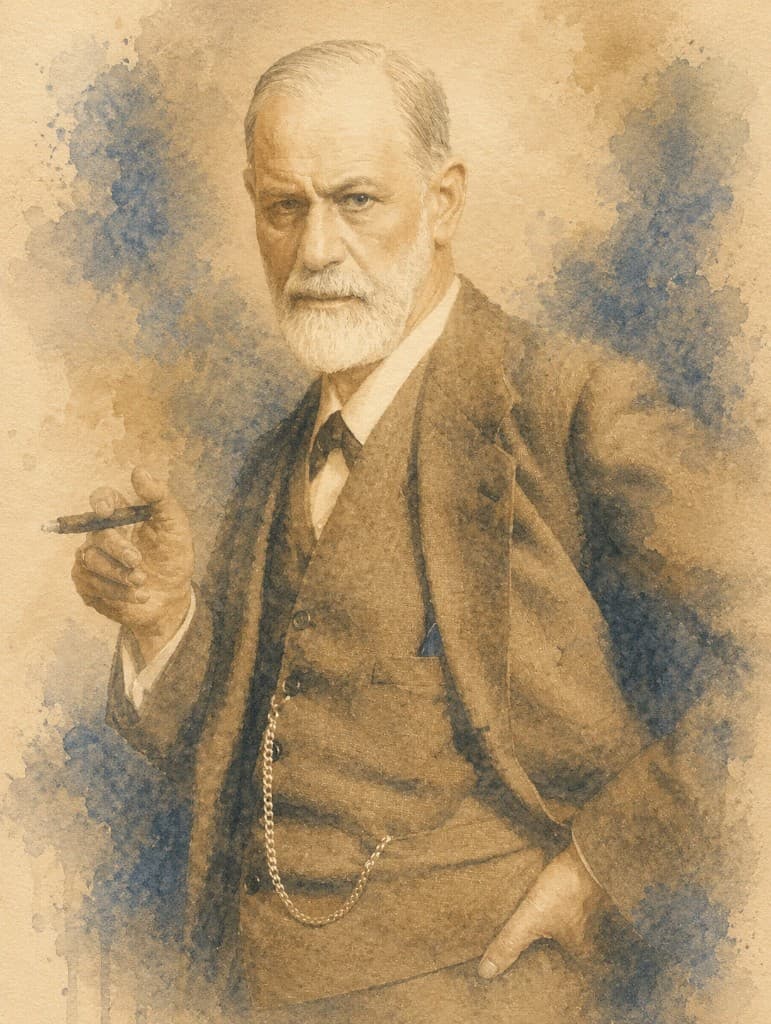
1856 - 1939
Freud placed the unconscious at the center of human life and changed how modern people understand desire, repression, and conflict.
Sigmund Freud changed the modern understanding of the self by arguing that conscious thought is only a small part of mental life. Beneath ordinary awareness, he saw wishes, fears, memories, and conflicts shaping behavior in disguised forms.
His theories of repression, dream interpretation, transference, and psychic conflict created the foundation for psychoanalysis. Even where later thinkers revised or rejected him, Freud's central insight remained unavoidable: we are not transparent to ourselves.
Freud matters for any serious study of inner life because he forced psychology to ask what the self hides from itself, and what those hidden things cost when they remain unnamed.
1899
Freud's landmark work on dreams as expressions of unconscious wish and conflict.
1905
A foundational text on development, desire, and psychosexual theory.
1930
An influential reflection on instinct, guilt, culture, and human dissatisfaction.
1923
Introduced Freud's structural model of id, ego, and superego.