1883-1885
Thus Spoke Zarathustra
Nietzsche's poetic work on transformation, value creation, and self-overcoming.
 Undiscovered Self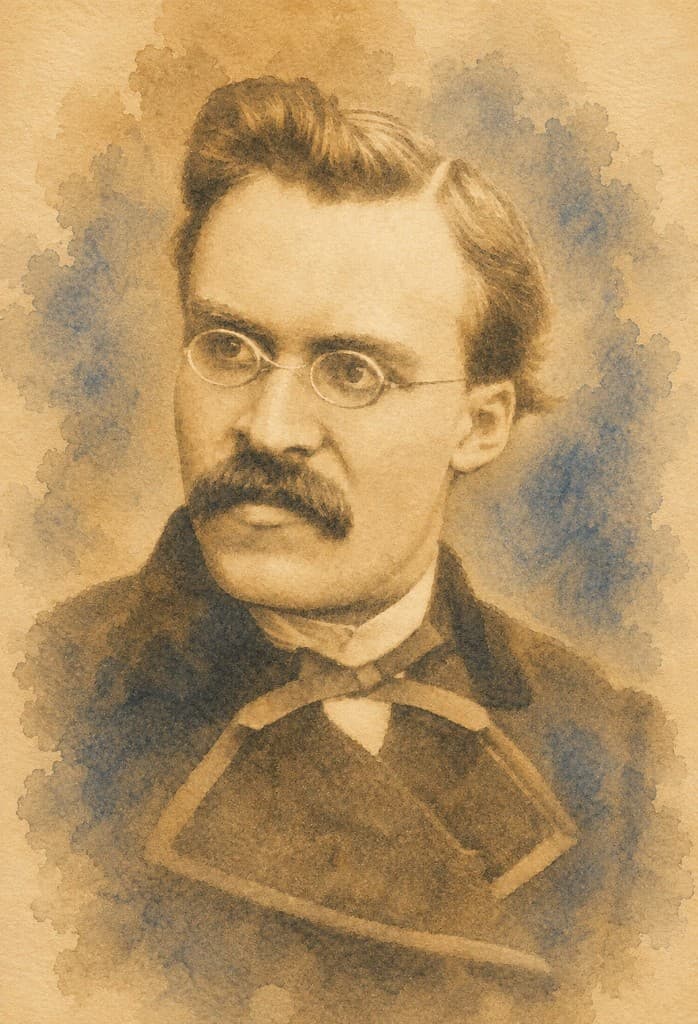
1844 - 1900
Nietzsche examined morality, suffering, resentment, meaning, and the difficult task of becoming who one is.
Friedrich Nietzsche was not a psychologist in the clinical sense, but few thinkers saw more deeply into the motives beneath morality, belief, resentment, and self-deception. His philosophy exposed the hidden emotional forces that often disguise themselves as virtue or truth.
Nietzsche's work asks what happens when inherited meanings collapse, and whether a person can still create a life of strength, honesty, and depth. He treated suffering not only as something to escape, but as something that can transform the one who learns how to bear it.
His importance for inner life lies in his refusal of easy consolation. Nietzsche forces the reader to ask whether they are living from fear, imitation, resentment, or genuine creative strength.
1883-1885
Nietzsche's poetic work on transformation, value creation, and self-overcoming.
1886
A critique of morality, philosophy, and the motives beneath truth claims.
1887
A major analysis of guilt, resentment, punishment, and moral psychology.
1882
Contains key reflections on meaning, joy, tragedy, and the death of God.