1921
Psychological Types
Introduced Jung's influential theory of psychological attitudes and functions.
 Undiscovered Self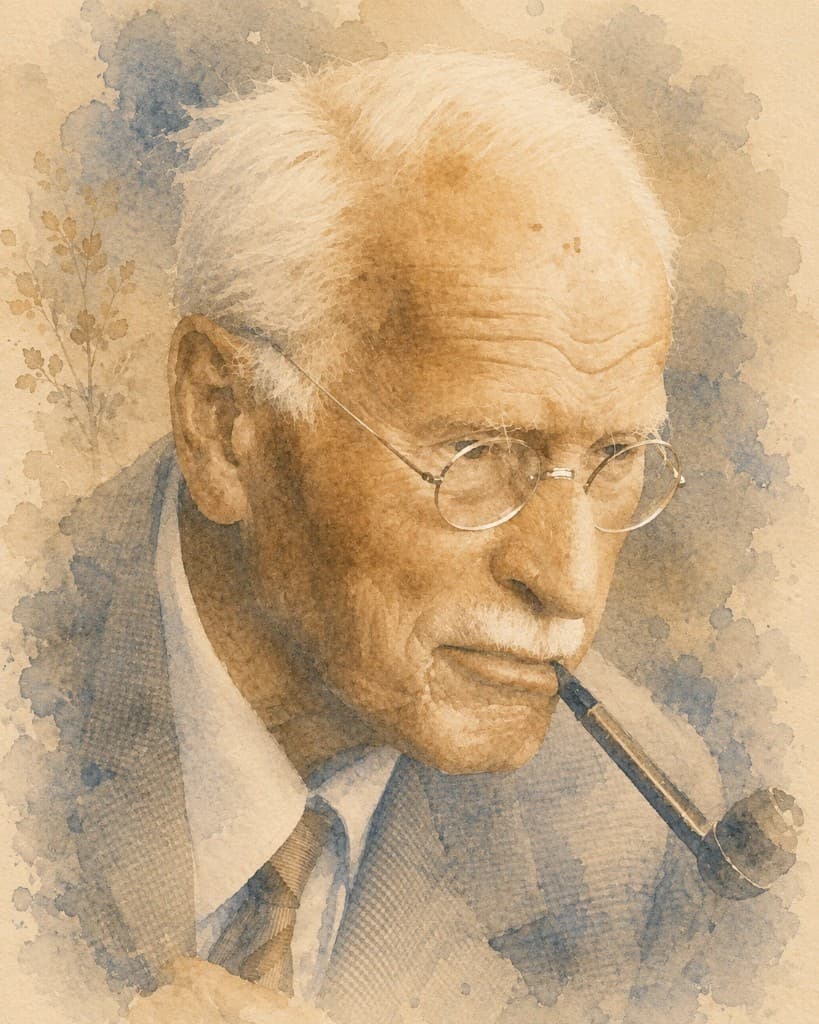
1875 - 1961
Jung expanded psychology into the symbolic life of dreams, myth, archetypes, shadow, and individuation.
Carl Jung approached the psyche as more than a collection of symptoms. For Jung, the mind was symbolic, layered, and oriented toward wholeness. Dreams, fantasies, myths, and religious images were not merely irrational leftovers, but expressions of a deeper intelligence moving beneath conscious control.
His work gave modern psychology a language for the shadow, the persona, archetypes, the collective unconscious, and individuation. Jung's central concern was not simply how a person becomes functional, but how a person becomes whole.
In the context of inner formation, Jung remains essential because he took seriously the parts of the self that ordinary life tends to exile: the dream, the wound, the religious image, the irrational fear, and the hidden possibility.
1921
Introduced Jung's influential theory of psychological attitudes and functions.
1933
A widely read collection on dreams, psychotherapy, spirituality, and modern life.
1951
A major work on the self, shadow, and symbolic images in Christianity.
1962
An autobiographical account of Jung's inner life and intellectual development.